
Coffee Table Styling: Tips To Improve Your Morning Cup of Joe
When you picture your living room or family room, what furniture pieces come to mind? Most likely your sofa and end tables. Probably your lighting fixtures, as well. However, your coffee table might get overlooked. Why is that? While it serves such an important function, it often gets forgotten— meaning it hasn’t received the proper refresh it’s needed in a while.
What makes for an amazing coffee table design? It’s all about the three-part styling formula: base, height and personality. Grab a cup of coffee and let’s discuss how to make your table more aesthetically pleasing, whether that be through strategically placing a coffee table book, putting fresh flowers in your favorite vase or lighting a large candle.
How To Position Coffee Tables and Ottomans
There’s no getting around the fact that the coffee table belongs near furniture. After all, its main objective is to offer convenience in holding beverages, books and gorgeous accessories to display in your living space.
On the other hand, there’s nothing quite like sitting back in your favorite chair after a long, busy day of work — and an ottoman is a perfect place for your feet to land. While usually used as a place to kick up your feet, you can also use them for storage or even as a substitute for the coffee table if you want to take a non-traditional route.
These two pieces of furniture can be used interchangeably, depending on your home’s style. But, how can you arrange them so they maximize both style and functionality? Here are a few considerations to help you determine the perfect positioning for your coffee table or ottoman:
Room Layout
Start by evaluating the shape and size of your room. In smaller living rooms, a sleek coffee table or a dual-purpose ottoman can help save space. In larger rooms, you may have the flexibility to use both — consider placing a coffee table in front of the main seating area, and an ottoman by a side chair or sectional corner. Make sure the scale of the piece fits the seating — a large sectional can handle a bigger table or ottoman, while a petite loveseat may require something more compact.
Functional Considerations
Think about how you’ll use the space day-to-day. If you entertain often, a coffee table offers a hard surface that’s perfect for drinks and snacks. If comfort is key and you enjoy stretching out or lounging, an ottoman can serve as a comfy footrest or even extra seating. Some ottomans also open up for storage, making them especially useful in small spaces.
Visual Balance
Your coffee table or ottoman should complement the proportions of your furniture. A good rule of thumb is for the table or ottoman to be about two-thirds the length of your sofa and the same height or slightly lower than the seat cushions. For a cohesive look, choose shapes and materials that reflect your overall design style — round ottomans work well with softer layouts, while angular coffee tables add structure to modern spaces.
Traffic Flow
Leave enough space for easy movement around the furniture. Ideally, there should be about 16–18 inches between your seating and the coffee table or ottoman. This provides enough room for people to walk through without bumping their knees, while still keeping items within arm’s reach. If your living space is tight, consider a lighter piece that’s easy to move when needed.
Some popular layout ideas include:
- Centered in front of your sofa.
- Slightly off-center for a more dramatic look.
- Between multiple seating arrangements to serve as a focal point.
- In a conversation area by lounge chairs or a cozy corner.
- Angled diagonally in front of the sofa.
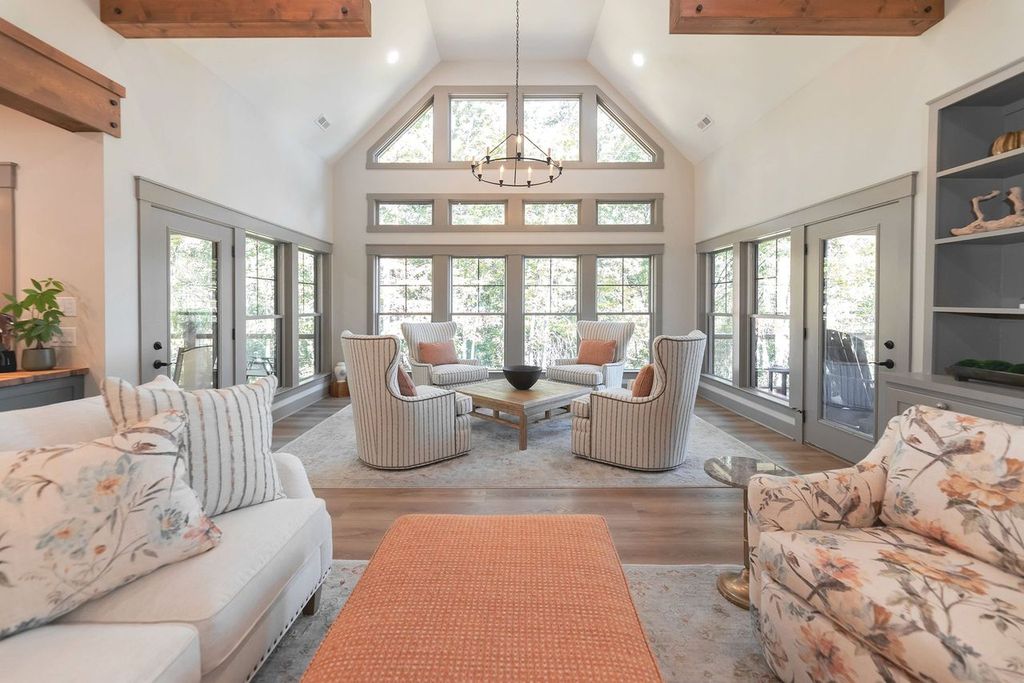
Both ottomans and coffee tables have their place, as long as you set them up strategically.
Tips To Achieve the Right Coffee Table Look
With the right setup in place, it’s time to start decorating. Follow these types for the perfect coffee table styling:
Tip 1: Use the 3-Part Styling Formula
Think of your coffee table as a mini stage with three key elements: base, height and personality.
- The base grounds the table — think trays, books or a runner.
- Height draws the eye upward — a vase with fresh flowers, a tall candle or a sculpture works beautifully.
- Personality is your chance to showcase your style — small keepsakes, unique art objects or seasonal accents.
These three parts together create a balanced, intentional display.
Tip 2: Use Proportion and Balance for Different Table Shapes
Not all coffee tables are created equal, and your styling should match the shape. For rectangular tables, create symmetry by placing matching elements at each end and a statement piece in the center.
Round tables work well with triangular arrangements — group items in varying heights so they feel organic yet balanced. For square tables, divide the surface into quadrants, placing a different type of coffee table decor pieces in each section for visual interest.
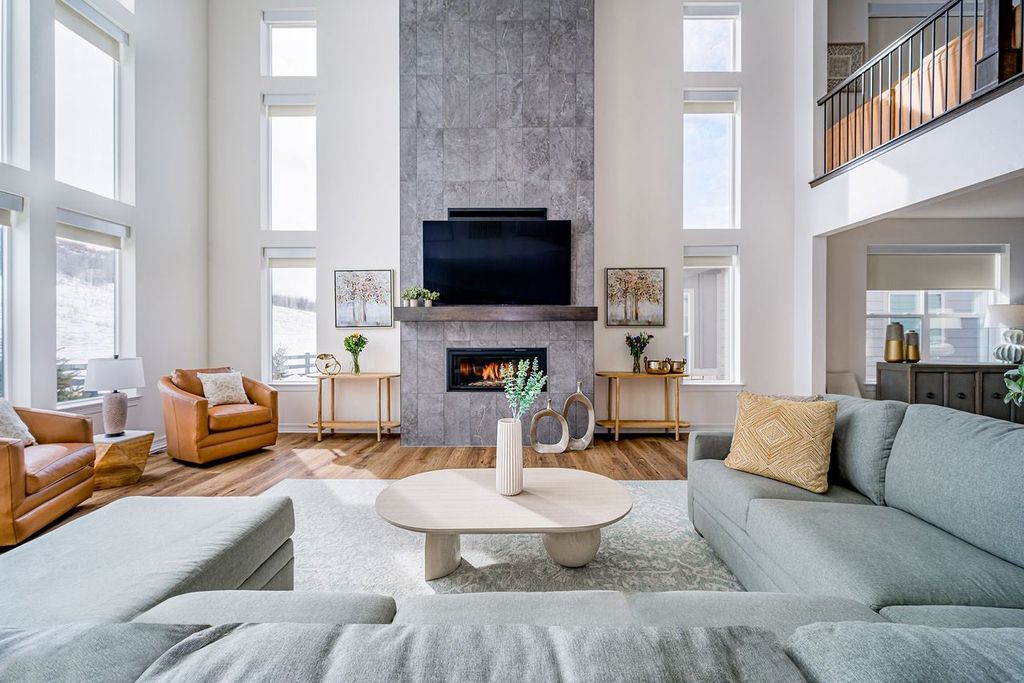
Tip 3: Layering Essentials
Flat displays can feel lifeless — layering adds depth and texture. Stack coffee table books and top them with a decorative item, or layer a decorative tray over a runner for an instant upgrade. You could also mix materials like wood, glass, ceramic and metal to keep the look dynamic. Soft elements, like a small plant or fabric coaster set, can soften hard lines and make the space feel more inviting.
Tip 4: Function vs. Aesthetics
The best coffee table styling blends beauty with practicality. If you use your table daily for snacks or drinks, leave space open for function. Use trays so items can be moved easily when needed.
If your coffee table is more of a design statement, lean into bolder decorative choices. Either way, aim for a setup that looks great but doesn’t make guests afraid to actually use the table.
We Can Help
Rearranging and styling your coffee tables and ottomans makes more of an impact than you once believed. If you need help bringing these tips to life, consider contacting a personal decorator from Decorating Den Interiors.
They’ll come to your home for a free consultation and offer insight and advice based on the allotted space in your home and your personality, unique style and ideas. With their help, you can put the finishing touches on that room you’ve been putting aside for years.
So what are you waiting for? Find a personal decorator near you to get started right away.